Towards a New Era of Spine Care: The Evolution of Research, Inequities, and Technology-Based Innovat
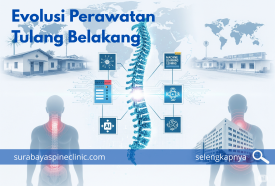
Over the past two decades, spine care has undergone significant transformation, in line with the rising global burden of musculoskeletal disorders. In the early 2000s, large-scale studies such as the Spine Patient Outcomes Research Trial (SPORT) marked a milestone by comparing the cost-effectiveness of surgical and non-surgical approaches for three major diagnoses: spinal stenosis, degenerative spondylolisthesis, and disc herniation. The findings concluded that while surgery was relatively expensive, it generally improved patients’ quality of life, especially over a four-year period.
However, despite the success of surgical interventions, subsequent studies found that many patients receiving conservative therapy experienced pain recurrence, even after initial symptom resolution. Suri et al. (2016) reported that 41% of patients experienced a recurrence of low back pain within three years after non-surgical treatment, with risk factors including smoking and joint problems. These findings highlight that medical solutions cannot stand alone without considering lifestyle and social factors.
In response to these challenges, community-based approaches have gained increasing attention. A study by Munakomi et al. (2017) in Nepal showed that even in resource-limited settings, spinal injury care can yield clinical outcomes comparable to those in world-class facilities, provided the care is guided by appropriate protocols and local understanding. This represents a shift in paradigm from “centers of excellence” to “local contexts with high potential.”
A further concrete step was taken by World Spine Care (WSC), which established clinics in underserved regions such as Botswana and the Dominican Republic. Through the Global Spine Care Initiative (GSCI) model, they emphasized evidence-based care tailored to local cultures. This program was designed not only to provide medical services, but also to build research and training capacity at the local level for long-term sustainability.
As understanding of social determinants of health continues to deepen, researchers have increasingly highlighted the critical role of social factors in determining clinical outcomes. In a commentary on postoperative spine surgery, Nwachukwu (2022) emphasized that factors such as environmental poverty, access to primary care, and education levels strongly influence readmission rates, particularly within the first 30 days after surgery. This has triggered calls for health policies to be reformed to include social determinants as key indicators of service quality.
In line with these developments, Mallow et al. (2020) proposed a new model called Intelligence-Based Spine Care (IBSC). This model integrates clinical data, machine learning algorithms, and precision medicine to personalize clinical decision-making. Rather than relying on a one-size-fits-all protocol, IBSC leverages artificial intelligence to interpret the complex relationships between imaging data, patient symptoms, and treatment responses, enabling more predictive and adaptive care.
Finally, a minor correction published in 2019 in Arthritis Care & Research underscored the importance of transparency and accuracy in research data, even in seemingly simple matters. The correction regarding the patient sample size in an osteoarthritis (OA) study reflected the scientific community’s commitment to the validity of research evidence.
Conclusion
The journey of spine care research and policy has shifted from elite clinical models toward more inclusive, community-based approaches and now enters a digital era driven by artificial intelligence. Recent studies call for the integration of multidisciplinary strategies combining technology, public policy, local culture, and socioeconomic understanding to equitably and sustainably address the global burden of back pain and disability.
Back Pain: A Common Everyday Complaint That Has Become A Global Health Problem
Learn More
Dokter Saraf Surabaya Untuk Kram Betis Yang Sering Mengganggu Aktivitas Harian
Learn More