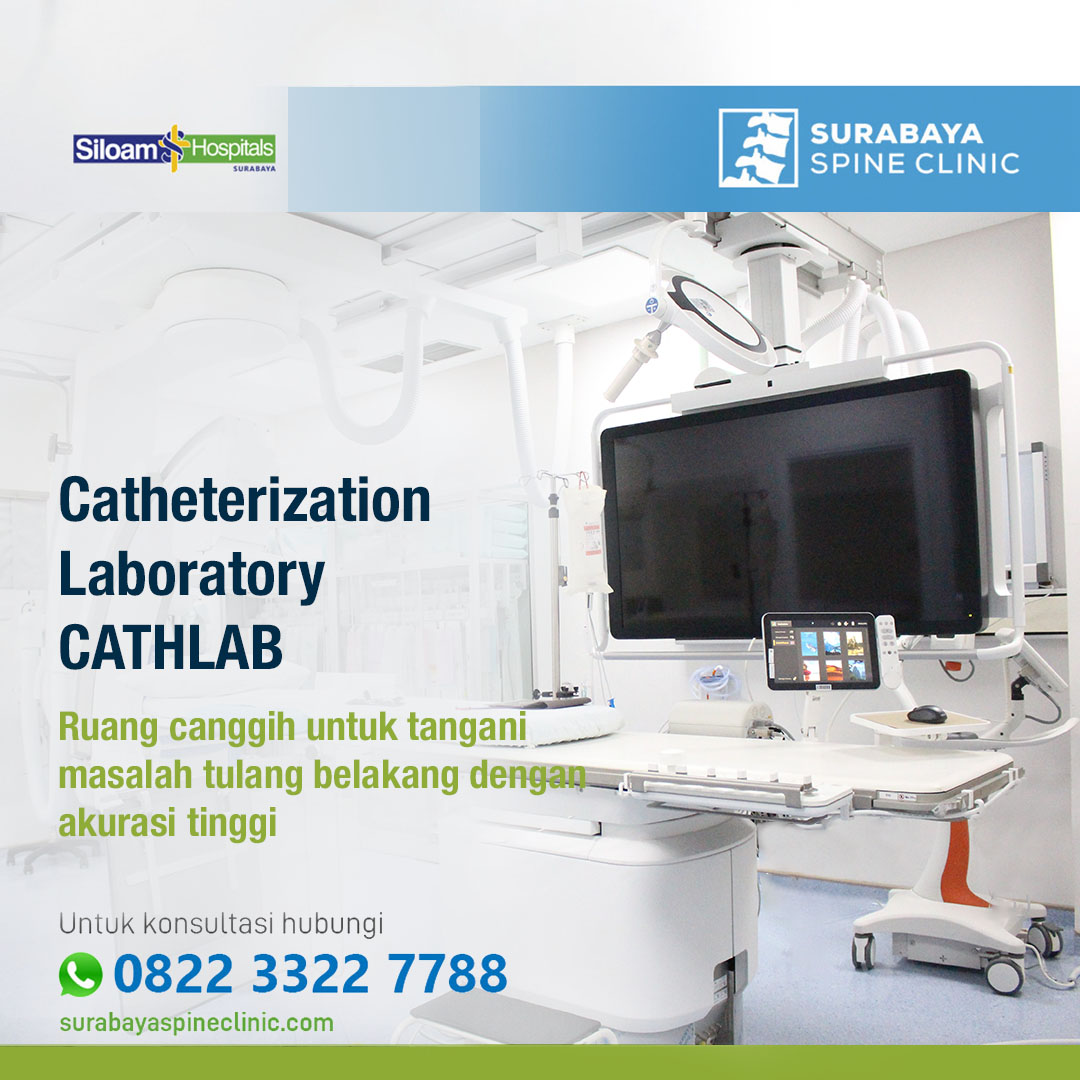
Cathlab (Catheterization Laboratory) is a special room with sophisticated equipment for carrying out diagnostic and interventional procedures. Although cathlabs are usually associated with cardiovascular procedures, the same technology, particularly fluoroscopy (a type of real-time X-ray), can be used in the treatment of spinal problems.
Here is how the cathlab works in treating spinal problems:
Fluoroscopy: This is the main component of the cathlab relevant to spine procedures. Fluoroscopy provides real-time X-ray images of the spine during the procedure. This allows the doctor to see exactly where they are working, ensuring the tools or materials used are placed correctly.
Vertebroplasty and Kyphoplasty: In this procedure, fluoroscopy is used to guide the doctor in injecting medical cement into the fractured or damaged vertebra. This stabilizes the vertebrae and relieves pain.
Epidurals and Nerve Blocks: Fluoroscopy guides the injection of medications into specific areas around the spine. With real-time X-ray images, doctors can ensure that the drug is injected precisely into the desired location.
Discography: During discography, contrast is injected into the intervertebral discs. Under fluoroscopy, contrast spreads within the disc, allowing the doctor to see damage or cracks in the disc.
Radiofrequency (RF) Nerve Ablation: Fluoroscopy helps in precisely placing the electrode near the nerve. Once properly placed, the electrodes send radiofrequency waves that destroy or damage parts of the nerve, helping to reduce pain.
Special Tools: In addition to fluoroscopy, the cathlab is equipped with a variety of special tools and instruments that enable minimally invasive interventions. This may include special needles, catheters, electrodes, and other equipment needed for spinal procedures.
It is important to note that although cathlabs provide the technology to perform these procedures with greater accuracy, not all spine problems can or should be treated in a cathlab. Always consult a spine specialist or interventional radiologist to determine the best approach for your condition.
Read more : Endoscopy